Patient access used to be treated as a scheduling problem. In “Advancing Patient Access at Scale,” a joint dialogue between TLCx and Commonwealth Purchasing Group (CPG), TLCx Chief Commercial Officer Bryan Gray and CPG Executive Director and SVP Rich Napolitano argue that for Federally Qualified Health Centers and community-based providers, access has become something else entirely: one of the clearest signals of whether an organization is actually working. The partnership exists because the usual fixes have stopped working. Across the CPG member network, patient demand keeps rising while staffing and operational capacity stay constrained, and the traditional response — adding staff, layering on technology, outsourcing isolated functions — has proven insufficient on its own. TLCx’s focus on human-centered, technology-enabled service delivery and CPG’s long-standing mission to improve efficiency for its members converge on a shared bet: what community health organizations need now is a coordinated approach that integrates people, process, and technology around specific, high-impact problems, not a generic transformation pitch. Bryan Gray frames the leadership challenge as a need to become ambidextrous: capable of redesigning how care is accessed while strengthening the operational systems that support delivery, at the same time. Redesign without operational discipline, he argues, leads to fragmented systems and inconsistent outcomes; operational excellence without redesign just reinforces workflows that no longer match how patients actually need to reach care. “Healthcare organizations must become ambidextrous,” he writes, “capable of redesigning how care is accessed while strengthening the operational systems that support delivery.” The goal isn’t transformation for its own sake — it’s dependable access, delivered through systems staff can trust and patients can rely on. Rich Napolitano brings the member-network reality check. CPG organizations are doing, in his words, extraordinary work under difficult conditions, but they’re wary of adding complexity in the name of improvement. “Technology alone is not the answer,” he states plainly — members want solutions that visibly ease day-to-day operations, not systems that require workarounds of their own. CPG’s job, as he describes it, is vetting partners who understand the realities of community healthcare and can show measurable value, because whatever gets introduced through the CPG network has to work across organizations with very different patient populations, staffing models, and resource constraints. The dialogue surfaces five strategic themes shaping how both organizations see the next phase of healthcare delivery. Patient access has become an operational imperative, not just a clinical outcome — delays now visibly affect patient outcomes, staff morale, and financial sustainability, not just scheduling metrics. Efficiency has to translate into patient impact, not just cost reduction — savings that don’t flow back into care delivery miss the point for community health organizations specifically. Technology has to enable people, not add complexity — frontline teams need tools that simplify daily work, not new systems to manage on top of old ones. Sustainable improvement requires ambidextrous leadership — the capacity to redesign and operationalize at the same time, rather than picking one. And proof will define trust — healthcare leaders are no longer willing to adopt solutions on conceptual promises alone; pilot results and measurable outcomes are now the entry price for credibility. From there, the paper gets specific about where early, provable impact is realistic. Reducing missed appointments through structured, multi-channel outreach — personalized reminders, real-time confirmation workflows, follow-up for high-risk patients, and performance tracking — addresses one of the most persistent drains on clinical capacity. Strengthening intake and scheduling replaces fragmented, repetitive first-contact workflows with streamlined data capture and intelligent routing. Reducing staff burden through workflow automation targets the repetitive administrative tasks driving workforce fatigue and turnover risk. And building visibility into access performance — dashboards tracking appointment adherence, bottleneck monitoring, performance feedback loops — gives leaders the real-time picture that fragmented reporting systems currently can’t. Rather than pitching sweeping transformation, TLCx and CPG lay out a four-stage path they call structured momentum. Stage 1 identifies priority organizations for early engagement, selected by readiness, patient volume, and willingness to participate in a measured pilot — not a network-wide rollout from day one. Stage 2 runs focused pilot programs against clearly defined objectives, with continuous monitoring and frontline feedback loops, treated explicitly as proof-building exercises rather than one-off experiments. Stage 3 scales what worked — not through simple replication, but structured adaptation, standardized workflows, and shared benchmarks across the broader CPG network. Stage 4 embeds continuous improvement as a permanent capability: regular performance review, ongoing workflow refinement, and workforce engagement, so organizations keep adapting without needing another disruptive transformation effort down the line. The paper closes on a note that’s less about speed than about trust: healthcare transformation, in this framing, doesn’t come from isolated technology investments or temporary operational fixes. It comes from focused action, measurable outcomes, and the steady expansion of what’s already been proven to work — a path both ambitious and, as Bryan Gray and Rich Napolitano frame it, genuinely achievable for organizations operating under real constraints. Download the White Paper: Advancing Patient Access at Scale

What CFOs Actually Want to Hear About CX Spend in 2027 – TLCx
Budget season is here, and CFOs stopped asking whether CX matters a long time ago. In “What CFOs Actually Want to Hear About CX Spend in 2027,” TLCx Chief Commercial Officer Bryan Gray argues that the real question this year is whether CX spend can meet the same standard as every other line item — and warns that the metrics most CX leaders still bring to budget reviews will tell the wrong story. Bryan Gray picks up where his earlier paper, “The Human in the Middle,” left off. That piece argued that as AI absorbs routine contacts, what reaches people gets harder — billing disputes with no clean script, confused patients, customers one bad conversation away from leaving. This paper, he writes, is about what that same shift looks like once it reaches the finance review, because the operating model has changed faster than the way most organizations measure it. According to Bryan Gray, CX won its fight to be treated as a strategic investment rather than a cost center — very few CFOs still need convincing that customer experience affects retention, revenue, and brand. But winning that argument changed what finance expects once the money is approved. CFOs no longer want to hear that CX matters in the abstract; they want it held to the same discipline as every other function competing for capital, reporting outcomes rather than calls handled and tickets closed. Bryan Gray carries forward the “measurement trap” from his prior paper and applies it directly to the budget conversation. On the old scorecard, three numbers move the wrong way at once: average handle time rises, which finance reads as agents slowing down, when the real cause is that short, simple contacts moved to automation. Volume per agent falls, which reads as declining productivity, when each remaining contact actually carries more weight. And cost per human contact rises, which reads as the automation investment failing to deliver, when total cost to serve may well have dropped — the per-contact average only rose because the mix changed. If CX leaders bring last year’s metrics into this year’s review, Bryan Gray warns, they’ll be defending a number that no longer describes what their operation does. He identifies three things CFOs are listening for, whether or not the CX leader in the room realizes it: a business metric with a direct line to a number finance already tracks, like retention or cost to serve, rather than a CX-specific measure that needs translation; a comparison showing how this use of capital stacks up against real alternatives — automating further, holding steady, or investing in the people handling the hardest work; and a forward view showing that the CX leader has modeled how the mix will keep shifting next year, rather than being surprised by it. The practical fix, Bryan Gray argues, starts with changing the unit of measure. Cost per contact made sense when contacts were interchangeable; they’re not anymore. He proposes cost per resolved outcome, viewed across automated and human channels together, as the better unit — one that shows total cost to serve falling as automation takes hold, makes the human layer’s contribution to resolution and retention visible, and removes the false signal that people in the middle are becoming less efficient when they’re actually carrying the work that most shapes whether customers stay. Underneath those three metrics, Bryan Gray identifies a quieter test: trust. CFOs are gauging whether the measurement is sound enough to survive an audit, and whether the person presenting it would flag a result that went the wrong way. He recommends CX leaders be ready to answer four questions before anyone asks: how a resolution is defined, how retention is attributed to a given interaction, how the mix shift is separated from actual performance change, and where the data has limits. Naming those gaps before finance finds them, he writes, is usually what makes the rest of the numbers believable. For organizations that outsource customer operations, Bryan Gray argues this isn’t a conversation CX leaders should have to build alone, since the partner is producing a meaningful share of the data and handling many of the interactions that most affect retention and cost to serve. Building on the three partner questions from “The Human in the Middle,” he adds three more for budget season: can the partner report on business outcomes rather than just activity; can they show the mix shift as it happens, separating a harder call mix from an actual change in performance; and will they help build the forward view and stand behind its assumptions. Bryan Gray closes with a clear verdict: CX doesn’t need a lower bar in 2027 planning, and it should stop asking for one. It needs to meet the same bar every other function has already cleared — a business metric, a comparison, and a forward view, built on measurement finance can trust. The organizations that reframe their numbers before budgets are set, he writes, will be the ones still investing in the people in the middle when the next cycle comes around. Download the Insight: What CFOs Actually Want to Hear About CX Spend in 2027
The Human in the Middle – TLCx
AI is taking on the easy calls. In *”The Human in the Middle,”* TLCx Chief Commercial Officer Bryan Gray argues that what’s left for people isn’t a smaller job — it’s a harder one, and it needs a different kind of agent, leader, and partner to get right. Bryan Gray builds on a concept he heard repeatedly in a recent client conversation: “human in the middle.” The idea sounds simple — AI handles routine, transactional work, and people handle the conversations that need a person. Most service leaders agree with it in principle, Bryan Gray writes, but far fewer have worked through what it actually demands of their operation, their frontline, and their partners. The piece picks up where TLCx CTO DeJon Gaines’s “Where the Human Stays” left off: once a system knows where the human belongs, what does it take to make that person good at the job? Bryan Gray illustrates the shift with a billing program TLCx supports, where AI now handles balance inquiries and standard payments — work that used to make up a steady, predictable share of agent volume. What reaches people now looks different: a customer being billed for both an old and new address, frustrated and justified in being so, with no script that covers the situation end to end. As AI absorbs the easy work, Bryan Gray writes, the human workload doesn’t get smaller — it gets harder, because every remaining interaction is by definition one the system couldn’t finish on its own. He pushes back on picturing the human in the middle as a safety net or a handoff point. Instead, Bryan Gray describes the agent standing between three things at once: the system and the customer, translating what the AI already did so the customer never repeats themselves; the policy and the person, applying a general rule fairly to a specific case; and the brand and the relationship, since for many customers that one conversation decides whether they stay. “The human in the middle,” he writes, “is not where automation ends. It is where the relationship is won or lost.” That shift changes what hiring, training, and tenure need to look like. Bryan Gray argues hiring has to test for judgment and de-escalation, not just system aptitude; training has to move from scripts to situations, giving new agents practice with the hardest calls rather than the easiest ones; and tenure matters more, because the knowledge that lets an experienced agent resolve a messy dispute in one call takes real time to build. He notes the same pattern is already visible in healthcare and patient access, where routine reminders move to automated channels and the calls that remain are the confused patient, the coordinating caregiver, or the frightened caller who needs to be heard first. The shift also changes what’s asked of supervisors. Bryan Gray writes that when almost every call is a hard one, coaching has to focus on judgment — why an agent issued a credit, how they handled an angry customer’s first thirty seconds — not just scores. He flags a “measurement trap” leaders need to anticipate: as AI removes the shortest, simplest contacts, average handle time rises and volume per agent falls even when nothing about performance has changed. An operation still judging people on the old scorecard, he warns, will conclude they’re getting worse at exactly the moment they’re doing more valuable work. The fix is measuring the middle on what it’s actually there to do — resolving the problem in one contact, keeping the customer, and getting the judgment calls right. Bryan Gray is direct that human in the middle only works if the person in the middle is allowed to finish the job. If an agent can only submit a request and tell the customer someone will follow up, he argues, the model has failed everyone involved. He recommends clients settle four questions early and in writing: what the agent can resolve on the call, when and to whom they escalate, what the AI hands over to the agent, and how the hardest calls get reviewed together. That authority question extends to how companies should evaluate outsourcing partners. Bryan Gray argues that cost per contact and speed of answer still matter, but in a human-in-the-middle model, the partner is handling the interactions that most shape how customers feel about a brand. He adds three questions buyers should ask alongside the technology questions DeJon Gaines proposed: how a partner hires and trains for the calls AI can’t handle, how they measure people once automation changes the call mix, and what authority their agents will actually have to resolve problems on the call. Bryan Gray closes with a wider claim about where the competitive advantage lies: the companies that win the next few years won’t be the ones that automate the most — they’ll be the ones that invest the most in what’s left, the people in the middle, the leaders who coach them, and the authority that lets them finish the job. Download the Whitepaper: The Human in the Middle
Where Human Stays: Routing AI Decisions on Consequence, Not Confidence
Where the Human Stays,” TLCx Chief Technology Officer DeJon Gaines argues that some decisions in regulated customer service require a person even when the AI is right.
Meeting the Bank Where the Customer Is – TLCx
Consumer banks are making two large investments that look, at first glance, like they contradict each other: pouring capital into branch networks while racing to deploy generative AI designed to keep customers out of branches entirely. In “Meeting the Bank Where the Customer Is,” TLCx Vice President of Banking and Financial Services Solutions Katia Acciarresi explains why this isn’t a contradiction — it’s one strategy playing out on two fronts — and what it means for the BPO partners banks rely on to deliver it. Katia Acciarresi points to the numbers behind both bets. Bank of America’s EricaAssist now supports more than 18,000 customer service representatives with real-time guidance in under three seconds, while Fifth Third’s AI assistant, Jeanie, has lifted self-service containment from 3 percent to 42 percent. At the same time, Bank of America is opening 150 new branches, PNC is targeting 300 by 2030, and JPMorgan Chase has committed to roughly 500 new locations, including a tripling of its presence in Alabama. Digital channels absorb routine, high-volume servicing, Katia Acciarresi writes, while human channels — branch staff and contact center agents alike — are redeployed toward the moments that actually build or defend a deposit relationship. For BPO partners, Katia Acciarresi argues, this changes the job itself. The routine call volume that used to fill a queue is shrinking, and what remains is more complex, higher-stakes, and more consequential to a bank’s growth targets. Partners who built their value proposition on handling volume at scale need a different offer: agents who can operate inside AI-assisted workflows, absorb surge demand from branch build-outs, support small-business digital banking, and do it all inside the governance frameworks banks are now formalizing for AI use. Katia Acciarresi breaks down what this dual investment means channel by channel. In contact centers, the calls that still reach a live agent are, by definition, the ones AI couldn’t resolve — more complex account issues, more fraud disputes, more customers who are already frustrated because they tried the bot first. Agents also increasingly need to sell, not just resolve, as banks like Citizens Financial Group shift toward smaller branch footprints built around advice and relationship banking. In branch support, expansion at this scale is a staffing and onboarding problem before it’s anything else. Katia Acciarresi cites PNC’s FirstBank conversion, which moved 1,620 employees and roughly 780,000 customers onto a new platform in a single event, and Huntington’s Cadence conversion, which transitioned 4,500 colleagues and onboarded hundreds of thousands of customers — exactly the kind of surge event where a flexible, quickly scalable outsourced workforce keeps a bank’s own staff from being overwhelmed. In small-business digital banking, Katia Acciarresi notes that banks like US Bank, Fifth Third, and KeyBank are pushing self-service further into territory that used to belong to a relationship banker — which means small-business customers increasingly need support channels that understand small-business banking specifically, not generic retail servicing. On multilingual and underserved markets, she points to TD’s Spanish-language rollout as a template: generative AI accelerated translation work across nearly 1,000 mobile app screens, but human review still handled quality assurance. AI for speed, trained people for accuracy and trust, Katia Acciarresi writes, is a pattern likely to repeat as banks expand into new geographies. And on governance, she frames TD’s enterprise-wide Responsible AI Principles as a signal, not an isolated move. As AI takes on a larger share of customer-facing work, banks are formalizing how it can be used — and they’ll expect any partner touching those workflows to operate inside those standards, not beside them. Katia Acciarresi closes with three shifts BPO partners need to internalize: the work is more complex, not less, because AI has already absorbed the simple volume; it’s increasingly event-driven rather than steady-state, shaped by build-outs, conversions, and acquisitions; and it now sits inside AI-assisted, governed workflows rather than alongside them. “Banks are not choosing between branches and AI, or between digital and human channels,” she writes. “They are building both, deliberately, because each does something the other cannot. The BPO partners who keep pace will be the ones who stop thinking about channels as separate lines of business and start building for the handoffs between them.” Download the White Paper: Meeting the Bank Where the Customer Is
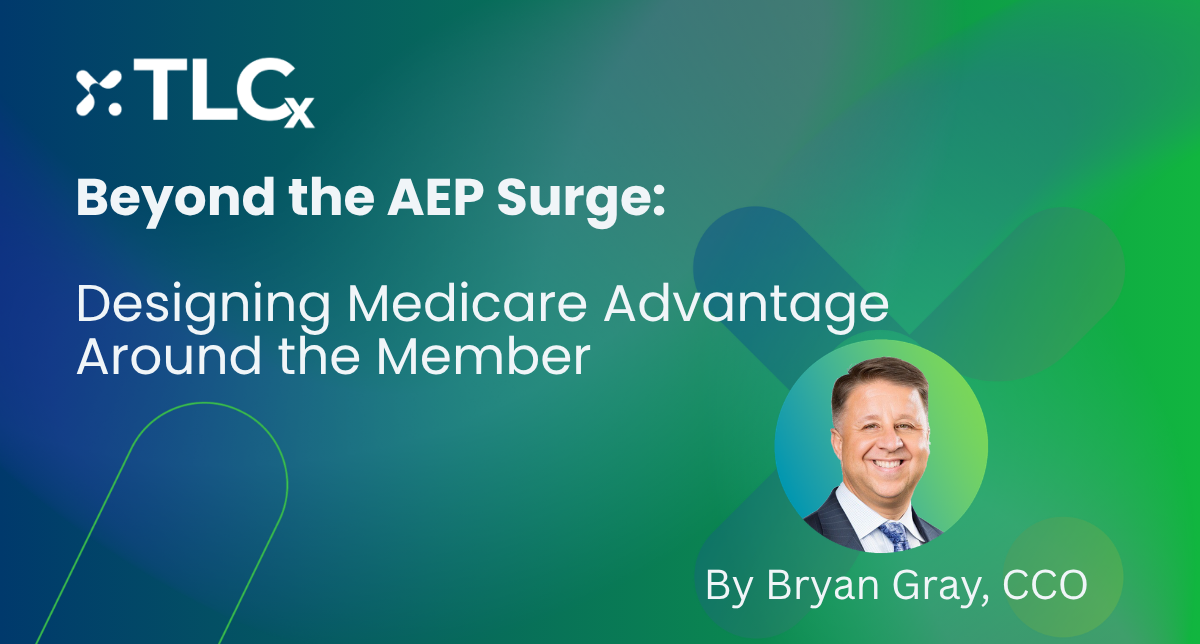
Beyond the AEP Surge: Designing Medicare Advantage Around the Member – TLCx
Every year, Medicare Advantage organizations enter a period of predictable operational intensity — and every year, that predictability still produces longer waits, repeat contacts, and frustrated members. In *”Beyond the AEP Surge,”* TLCx Chief Commercial Officer Bryan Gray argues that AEP and OEP are known operating conditions, not surprises, and health plans that treat them that way can turn seasonal pressure into a genuine advantage. Bryan Gray’s starting point is simple: AEP runs October 15 through December 7, and OEP runs January 1 through March 31, every single year. Members’ questions during those windows — network status, prescription costs, benefit changes — are entirely predictable too. So the leadership question, Bryan Gray writes, shouldn’t be “how do we handle the additional volume?” It should be “what should we design differently because we know this demand, and the reasons behind it, are coming?” That reframe matters because, as Bryan Gray points out, members don’t separate administrative service from clinical care. A call about a denied claim or a confusing benefits letter can materially affect whether a member can navigate the healthcare system at all. That means first-call resolution, language accessibility, quality assurance, and escalation management aren’t just contact-center metrics — they’re part of the broader member-care ecosystem. Bryan Gray also challenges a long-standing industry habit: optimizing purely for speed. A longer call that fully resolves a complicated issue, he argues, often creates more value than a fast call that generates a second contact or a complaint. He proposes a broader hierarchy of performance for enrollment season — can the member reach us, do we understand their actual need, can we resolve it completely, and did we eliminate the reason for another contact — which shifts quality assurance from checking script adherence to diagnosing why contacts fail in the first place. Complaints, repeat contacts, and escalations get a similar reframe. Rather than treating them as scores to minimize, Bryan Gray describes them as an early-warning system: if hundreds of members ask the same question, the problem probably isn’t the members — it’s a workflow, a knowledge gap, or a digital experience that isn’t actually resolving anything. On CMS Star Ratings, Bryan Gray draws a subtle but important distinction: plans that manage the *experience* that creates the score tend to outperform plans that manage the score directly. With CMS streamlining its 2027 measure set to sharpen focus on clinical care, outcomes, and patient experience, that distinction is becoming more consequential, not less. The paper organizes AEP/OEP readiness around three leadership imperatives: **Anticipate** — using historical demand and call-driver analysis to prepare not just for volume but for *why* members will call, with contingency plans for when the forecast is wrong; **Resolve** — giving frontline teams the authority and tools to solve problems completely, rather than letting efficiency targets encourage incomplete interactions; and **Learn** — capturing call reasons, complaints, and quality findings together, fast enough to change operations mid-season rather than just documenting them afterward. Bryan Gray is clear that AI and automation can amplify this model but can’t replace it. Automating a confusing process, he writes, just creates faster confusion. The starting point has to be the member need — where friction is occurring, which problems should be prevented, and where technology can be deployed safely against those questions. His closing argument is a reminder as much as a strategy: behind every service level is a person waiting, and behind every Star measure are individual members whose experiences created the result. AEP and OEP will always be predictable. Bryan Gray’s case is that clarity, resolution, and confidence for the member should be just as predictable. Download the White Paper: Beyond the AEP Surge: Designing Medicare Advantage Around the Member
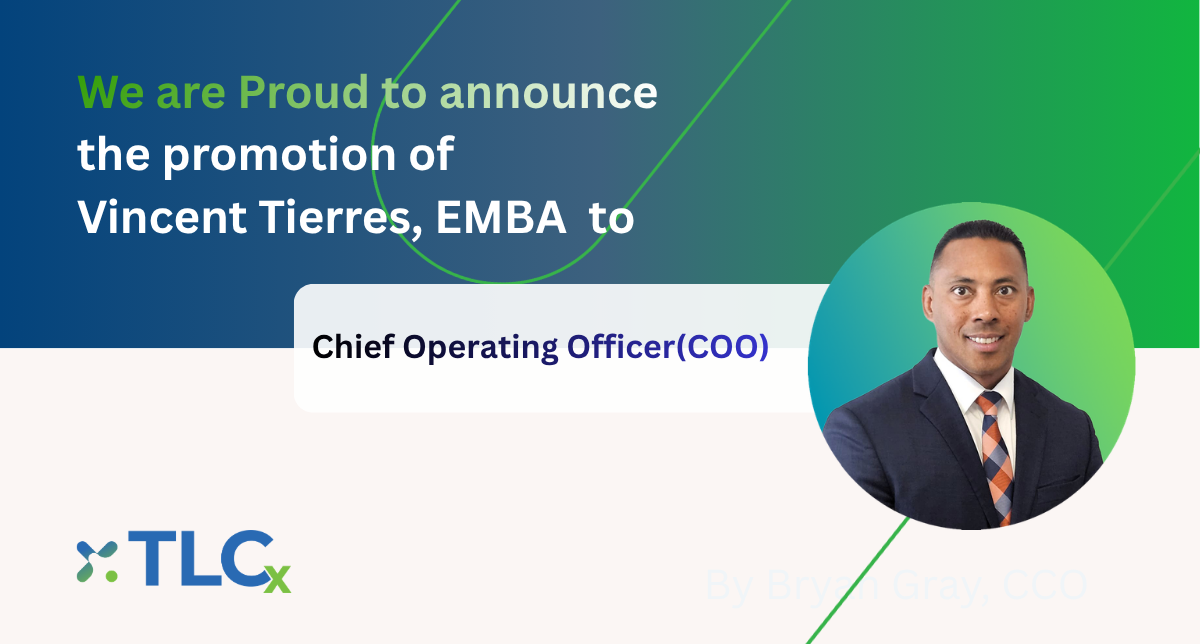
Announcement: Promotion of Vincent Tierres, EMBA
We’re excited to announce the promotion of Vincent Tierres, EMBA to Chief Operating Officer (COO) at TLCx. With 25 years of BPO and CX operations experience, Vince has built a reputation for operational excellence, disciplined execution, and consistently exceeding client and company performance expectations. In his role as COO, Vince oversees global service delivery with a particular focus on our domestic and nearshore operations—driving efficiency, quality, innovation, and scale as TLCx continues to evolve as a CX Transformation Partner powered by TLCx LaunchPad™. Prior to TLCx, Vince held senior operations leadership roles managing high-performing contact center teams and global multi-million-dollar operations in fast-paced environments. He holds a B.A. in Business Management from the University of Texas at San Antonio and an Executive MBA from the University of Texas at El Paso. Equally important, Vince is a people-first leader who is deeply committed to developing talent, building strong teams, and investing in continuous improvement—both professionally and personally. Based in our El Paso, TX operation, Vince brings the operational rigor and human-centered leadership that define TLCx’s employee-owned culture. Congratulations, Vince—thank you for your leadership and impact.
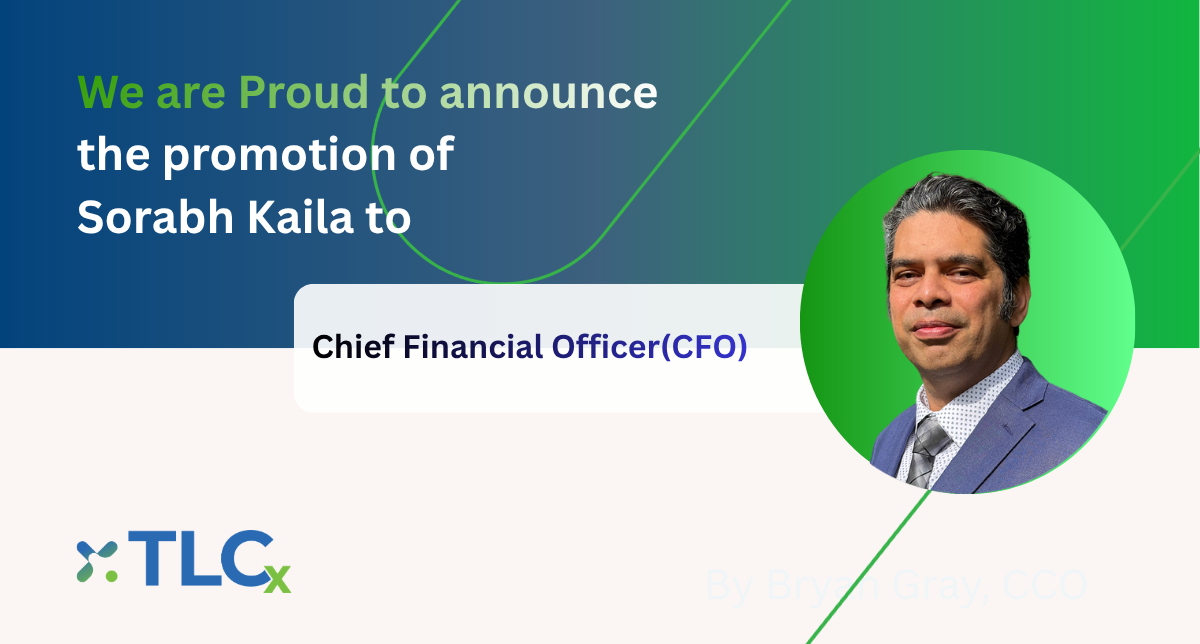
Announcement: Promotion of Sorabh Kaila
We’re proud to announce the promotion of Sorabh Kaila to Chief Financial Officer (CFO) at TLCx. Sorabh is a strategic, data-driven finance leader with more than 20 years of experience across FP&A, business intelligence, pricing strategy, forecasting, and enterprise profitability. Throughout his career at organizations including Teleperformance, Aegis, and Global Vantedge, he has consistently translated complex data into actionable insight—fueling automation, operational efficiency, and measurable business outcomes across global markets including the U.S., Philippines, and Canada. As CFO, Sorabh will oversee financial strategy, capital allocation, investor relations, and risk management —while championing data-led transformation and operational excellence at the core of TLCx’s employee-owned culture and our TLCx LaunchPad™ platform. With a master’s degree in data science from the University of Colorado Boulder and certifications including Six Sigma Black Belt, Project Management, and Corporate Finance, Sorabh brings a rare blend of financial acumen, analytical rigor, and operational insight. Congratulations, Sorabh—we’re excited to have you helping shape the next chapter of TLCx’s growth as a leading CX Transformation Partner.
TLCx Appoints Bryan Gray as Chief Commercial Officer
Industry Veteran Joins Leadership Team to Drive Growth and Innovation CEDAR RAPIDS, Iowa, Jan. 29, 2025 /PRNewswire/ — TLCx, a leading certified veteran-owned provider of customer experience (CX) outsourcing services for Fortune 500 companies, is pleased to announce the appointment of Bryan Gray as Chief Commercial Officer (CCO), effective immediately. Industry Veteran Joins Leadership Team to Drive Growth and Innovation Bryan Gray joins TLCx with over two decades of experience in the outsourcing and offshoring consulting industry, where he has excelled in driving revenue growth and leading high-performing teams. His expertise in AI-powered growth and customer service innovation, coupled with his strategic vision, has enabled him to scale businesses, develop effective go-to-market strategies, and establish transformative partnerships. Mr. Gray’s passion for leveraging generative AI positions him to significantly enhance customer experiences while optimizing sales, marketing, and operational efficiencies at TLCx. Before his tenure at TLCx, Mr. Gray served in pivotal roles at Alorica. As President of Financial Solutions, he significantly enhanced the brand’s market position within the banking and capital markets sector, contributing to substantial revenue growth and service expansion. Prior to that, he led the company’s expansion into the banking, fintech, and energy sectors, doubling annual revenues through his oversight of global digital and customer care operations for major U.S. financial institutions and others. In previous roles Mr. Gray has led strategy and operations for retail, technology, and consumer packaged goods sectors for globally recognized market leaders as well. In his new role at TLCx, Mr. Gray will spearhead the company’s commercial strategy, enhance business development efforts, and nurture client relationships. His focus will be on driving new sales opportunities within TLCx’s key verticals including BFSI, Retail, Healthcare, Government, and Media & Entertainment. He will also aim to strengthen ties with existing clients, expand services, elevate TLCx’s brand as a thought leader in the BPO and contact center industry, and push forward the adoption of digital tools and AI to improve efficiency and customer experiences. “We are thrilled to welcome Bryan to the TLCx family,” said Tom Cardella, Founder and CEO of TLCx. “His extensive experience and proven track record in the industry make him an invaluable addition to our leadership team. We are confident that Bryan’s strategic vision and commitment to excellence will propel TLCx to new heights as we continue to redefine the standards of service in CX outsourcing.” Mr. Gray commented on his new role, “I am honored to join a company that places such a strong emphasis on a people-first philosophy and operational excellence. I look forward to working with the talented team at TLCx to drive growth and deliver unparalleled customer experiences for our clients while accelerating our technological capabilities.” Founded in 2007 by Tom Cardella, TLCx has grown into a highly respected U.S.-based provider with 14 global locations. The company specializes in end-to-end custom solutions for customer care, acquisition, loyalty, retention, back office, and technical support, underlining its commitment to a people-first approach. About TLCx:TLCx is a certified veteran-owned company dedicated to enhancing customer experiences for Fortune 500 companies through innovative outsourcing solutions. With a focus on operational excellence and a people-first culture, TLCx has been a trusted partner in the CX industry for 18 years. For more information about TLCx, visit www.tlcx.com. Read the News Article
Elevating Clinical Excellence: TLCx Appoints Dr Ries as Chief Medical Officer
CEDAR RAPIDS, Iowa, Aug. 13, 2025 /PRNewswire/ — TLCx is taking a significant step toward its long-term vision of transforming the healthcare patient experience. This move underscores the company’s dedication to pioneering a new era of healthcare, one rooted in thoughtful design, patient-centered systems, and clinically sound innovation. “This is more than just a clinical appointment; it signifies a key milestone in realizing TLCx’s Vision 2030,” said Dr. Zachary Ries, Chief Medical Officer. “It will pioneer a new era of healthcare patient experience driven by intelligent design, human-first systems, and clinically grounded innovation.” TLCx is pleased to welcome Dr. Zachary Ries as its first Chief Medical Officer. This decisive appointment highlights TLCx’s dedication to reshaping the patient experience through clinically grounded innovation and human-first systems. Dr. Ries’s expertise will be instrumental in guiding TLCx toward its Vision 2030, which focuses on creating a healthcare journey prioritizing the needs and well-being of patients. Tom Cardella, Founder and CEO of TLCx, added, “I’ve known Dr. Ries for many years, and I couldn’t be more excited to have him join TLCx, especially at this time of transformation through human-driven AI solutions. His expertise and vision will be pivotal as we redefine healthcare delivery.” Dr. Zachary Ries is a Board-Certified Orthopedic Spine Surgeon from Des Moines, Iowa, with nearly 18 years of medical experience. A University of Iowa graduate with advanced fellowship training at Norton Leatherman Spine Center, he is dedicated to improving patient care through clinical expertise and innovation. The addition of a Chief Medical Officer will benefit the company in the following ways: Enhanced Clinical Leadership: Dr. Ries will provide vital leadership, ensuring TLCx’s strategies and innovations are firmly rooted in medical expertise. Patient-Centered Approach: With Dr. Ries at the helm, TLCx will further emphasize a patient-centered approach, designing systems and experiences that address the unique needs of each individual. Realization of Vision 2030: This appointment marks a milestone in realizing TLCx’s Vision 2030, moving the company closer to its goal of transforming healthcare patient experience. Drive Innovation: Dr. Ries will also help drive innovation at TLCx, leading development of products, services, and solutions that improve patient experience and outcomes. About TLCx:TLCx is a certified veteran-owned company dedicated to enhancing customer experiences for Fortune 500 companies through innovative outsourcing solutions. With a focus on operational excellence and a people-first culture, TLCx has been a trusted partner in the CX industry for 18 years. For more information, visit www.tlcx.com. Read the News Article