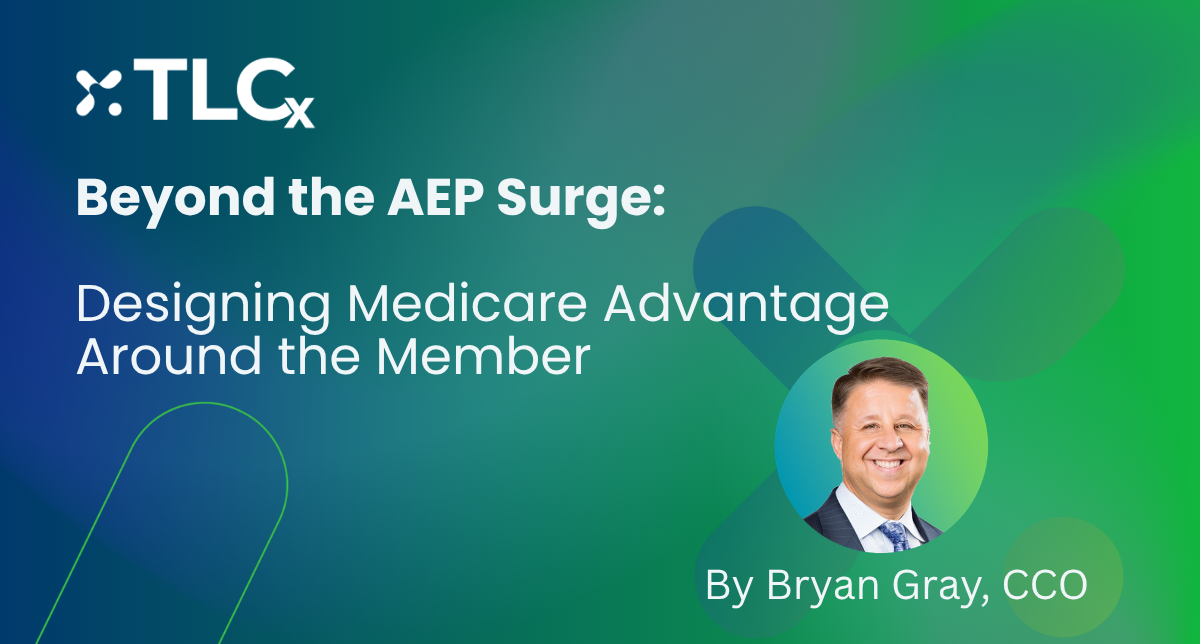
In “From Vendor to Value Creator: The New Scorecard for CX Partnerships,” TLCx Chief Commercial Officer Bryan Gray opens with a conversation he’s had more times than he can count over two decades: a procurement or CX leader asking, “we need to know how you’ll hit our SLAs.” He calls it a fair question — but also the wrong one to build an entire partnership around.
Here’s what he’s noticed sitting in those rooms: the companies most fixated on SLAs often have the flattest CX outcomes. Meanwhile, the brands actually growing loyalty and cutting churn are the ones that stopped treating their CX partner like a vendor a long time ago. Bryan Gray’s point is simple — the real question isn’t whether your partner is hitting your metrics. It’s whether they’re helping you figure out the right metrics in the first place.
He digs into why SLAs fall short. They were built for an older model of outsourcing, where the whole point was labor arbitrage and cost control — keep handle times down, staff to volume, answer calls fast. An SLA can tell you a call was picked up in under 30 seconds. It can’t tell you whether what happened after that made the customer more likely to stick around or start shopping elsewhere. That gap, Bryan Gray argues, is the actual structural reason so many CX programs stall out even while hitting every number in the contract.
So what does a real partnership look like instead of a vendor relationship? Bryan Gray lays out the differences plainly. A vendor executes your roadmap; a real partner helps build it. A vendor escalates problems when they show up; a partner catches them early because both sides are looking at the same data. A vendor saves the hard conversations for quarterly reviews; a partner has them continuously. And maybe most tellingly — a vendor deploys AI to cut headcount and shrink your invoice. A real partner deploys AI to make human interactions better, because that’s what actually moves the numbers that matter.
To make this concrete, Bryan Gray shares a real story: a partnership with one of North America’s most recognized home security brands, a Fortune 500 company. What started in Q2 2022 as a focused billing support engagement grew into something much bigger — TLCx became their sole billing vendor, their AI transformation partner during a major IVR overhaul, and a key driver of company-wide cost savings. The numbers speak for themselves: $527K in reduced credit spend year-over-year, over $3 million in cumulative ACH savings, 1.84 million annual calls handled, and a 26.5% improvement in credits per call — all while call volume actually grew by more than 18,000 contacts.
The most telling proof point wasn’t the numbers, though — it was what happened when the client rolled out a brand-new AI-driven IVR system, the kind of change that usually rattles a vendor relationship. Instead of waiting for instructions, TLCx proactively redesigned agent workflows, recalibrated its quality framework, and adapted routing to work alongside the new AI system — keeping performance steady through the whole transition. When TLCx started mapping the full customer journey and noticed patterns of friction, they didn’t just flag it. They built callback tracking, detractor segmentation, and cross-team alignment protocols to fix the systemic issue, not just the individual complaint. That’s the kind of thing a real partner does that a vendor doesn’t.
The article’s centerpiece is a 10-dimension scorecard Bryan Gray uses to tell vendors and value creators apart — covering things like success metrics (SLA compliance vs. actual business outcomes), how AI gets used (task automation vs. amplifying human judgment), and how risk gets handled (minimizing liability vs. shared accountability). He’s careful to say it’s not meant to be a scoring checklist — it’s meant to start a different kind of conversation with your current partner.
He closes with a direct challenge to CX and procurement leaders evaluating their partnerships right now: don’t lead with the SLA scorecard, lead with the outcomes you’re actually trying to drive. Don’t just ask your partner to defend their numbers — ask them to help co-author what comes next. And don’t evaluate on cost per seat — evaluate on value per interaction. As Bryan Gray puts it, the difference between a vendor who can pass your RFP and a partner who can actually transform your CX program isn’t in the contract. It’s in the conversations you have before the contract gets written.
Download the Insight – From Vendor to Value Creator: The New Scorecard for CX Partnerships